Mindfulness Tools for Daily Routines: A 2026 Guide
Table of Contents
- Why Mindfulness Tools Work Better Than Willpower
- Mindfulness Exercises for Beginners: Start With Five Minutes
- Morning Mindfulness Exercises That Take Under Ten Minutes
- Mindfulness Tools for Work: Micro-Practices for Busy Professionals
- Mindfulness Journal Prompts for Reflection and Gratitude
- Choosing Your Mindfulness Tools: Apps, Journals, and Keepsakes
- Troubleshooting: When Mindfulness Tools Stop Working
- Conclusion: Build a Routine You Can Keep
- Frequently Asked Questions
Last Updated: October 13, 2026
Why Mindfulness Tools Work Better Than Willpower
Willpower runs out. Mindfulness tools do not. That is why the most successful routines lean on structure rather than resolve.
Mindfulness tools are the physical objects, guided practices, and small rituals that make present-moment awareness easier to repeat: a journal on the nightstand, a breathing exercise tied to a commute, a candle lit at the same hour each evening.

The mistake most people make is treating mindfulness as a character trait rather than a system. A system survives a bad week. Willpower does not.
American Psychological Association on stress and health
Mindfulness Exercises for Beginners: Start With Five Minutes
Five minutes is enough to begin. The goal is not calm but consistency: a short session you actually do beats a long one you skip. The first two weeks often feel mechanical, and that is normal, the practice is working even when it does not feel pleasant.
Start here:
- Sit upright, feet flat, hands resting in your lap
- Set a timer for five minutes
- Follow your breath without changing it
- When your mind wanders, return to the breath
- Stop when the timer ends, whether or not it felt good
Breath awareness and elevator breathing
Breath awareness means paying attention to the physical sensation of breathing without controlling it. Elevator breathing adapts it to a public moment: inhale as if riding up one floor, exhale as if riding down, for three floors.
A useful refinement is the longer exhale: when your heart rate climbs, make the exhale roughly twice the inhale, in for four, out for eight.
Mindful walking and short walks
A short walk is the most underrated mindfulness tool available because it requires nothing you do not already own. Walk five minutes at a normal pace, attention on the contact between foot and ground. When you reach your destination, the practice is over.
A time-of-day habit map for beginners
Most beginner practices collapse because they are scheduled instead of attached. Instead of picking a time, attach the practice to a cue that already happens. Here is a morning-to-evening map you can copy:
| Existing habit (cue) | Practice | Time |
|---|---|---|
| Waking up | Ten slow breaths before getting out of bed | 2 min |
| Pouring coffee or tea | Hold the cup, notice warmth and scent before the first sip | 1 min |
| Walking to the car or bus | Foot-to-ground attention for the first block | 3 min |
| Sitting down at your desk | One full breath before opening email | 30 sec |
| Heating lunch | Three sounds you can hear | 1 min |
| Getting into bed | Slow exhale, longer than the inhale, three times | 2 min |
You do not need all six. Pick one cue, keep it for a week, then add a second. A practice tied to an existing habit survives; one that needs a calendar reminder usually does not.
Accessibility and low-cost adaptations
Mindfulness does not require a cushion, silence, or a particular posture. If sitting cross-legged is uncomfortable, practice lying down, in a supported chair, or standing. If silence is difficult, use a guided audio session or ambient sound. If you are sensory-sensitive, keep your eyes open and soften your gaze toward a fixed point. If money is tight, skip paid apps, a phone timer, a kitchen chair, and a notebook cover the same ground.
National Center for Complementary and Integrative Health on meditation and mindfulness
Morning Mindfulness Exercises That Take Under Ten Minutes
The morning is the easiest place to anchor a practice because the cue is built in: you wake up. Ten minutes is the realistic ceiling before the day pulls at you.
A workable morning sequence:
- Minute 1-2: Sit on the edge of the bed and take ten slow breaths
- Minute 3-5: Name three things you can hear, then three you can feel
- Minute 6-8: Write one sentence in a journal about how you want the day to feel
The last step matters more than it sounds: the first screen of the day often sets the tone for the next several hours.
Mindfulness Tools for Work: Micro-Practices for Busy Professionals
Work is where mindfulness tools earn their keep, because work is where the interruptions live. Use moments that already break your day rather than adding new ones.
Traffic light meditation and meeting resets
Traffic light meditation turns a red light into a cue: red means stop and take one breath, yellow means notice your body, green means go with attention. Meeting resets work the same way: in the thirty seconds before a call, put both feet on the floor and take one full breath before you speak.
| Moment | Practice | Time | Frequency |
|---|---|---|---|
| Red light | One conscious breath | 10 seconds | Every stop |
| Before a meeting | Feet on floor, one breath | 30 seconds | Each call |
| Between tasks | Notice three sounds | 60 seconds | 2-3 times daily |
| End of workday | Close the laptop, sit still | 2 minutes | Daily |
| Before sleep | Slow exhale, longer than inhale | 3 minutes | Nightly |
Mindfulness Journal Prompts for Reflection and Gratitude
A journal turns a fleeting moment of awareness into something you can return to, which is why it is one of the most durable mindfulness tools available. Each prompt below takes two to three minutes.
- What did I notice today that I usually walk past?
- Where did I feel tension in my body, and what was happening just before?
- What is one ordinary thing I am grateful for right now?
You do not need to answer all five. One honest sentence is a complete practice.
Choosing Your Mindfulness Tools: Apps, Journals, and Keepsakes
The right tool matches your available time, your experience level, and the moment of day you are trying to protect. Most guides list options without helping you choose. This section is a decision guide: start with the need, then the time, then the tool.
Choose by need first
Ask what problem you are actually trying to solve. The answer narrows the field fast:
- Racing mind at night → slow exhale plus a journal. Writing one sentence moves the thought out of your head and onto paper.
- Reactive at work → micro-practices tied to meetings and task transitions. These use breaks you already take.
- Feeling disconnected from your day → mindful walking and sensory attention. These reattach you to physical sensation.
Choose by time available
| If you have... | Start with | Why |
|---|---|---|
| Under 5 minutes | Breath awareness plus one daily cue | No setup, no equipment |
| 10 minutes, mornings | Journal and a warm drink | Anchors the practice to an existing habit |
| A high-stress job | Micro-practices tied to meetings | Uses breaks you already take |
| Trouble winding down | A candle and a slow exhale | Signals the day is closing |
Choose by experience level
Beginners do best with a single tool and a single cue, usually breath awareness or a journal. Intermediate practitioners can layer a second cue, such as a walk plus an evening reflection. Experienced practitioners often drop tools rather than add them, because the cue has become internal. If unsure, err toward fewer tools, not more.

Physical tools that carry the cue
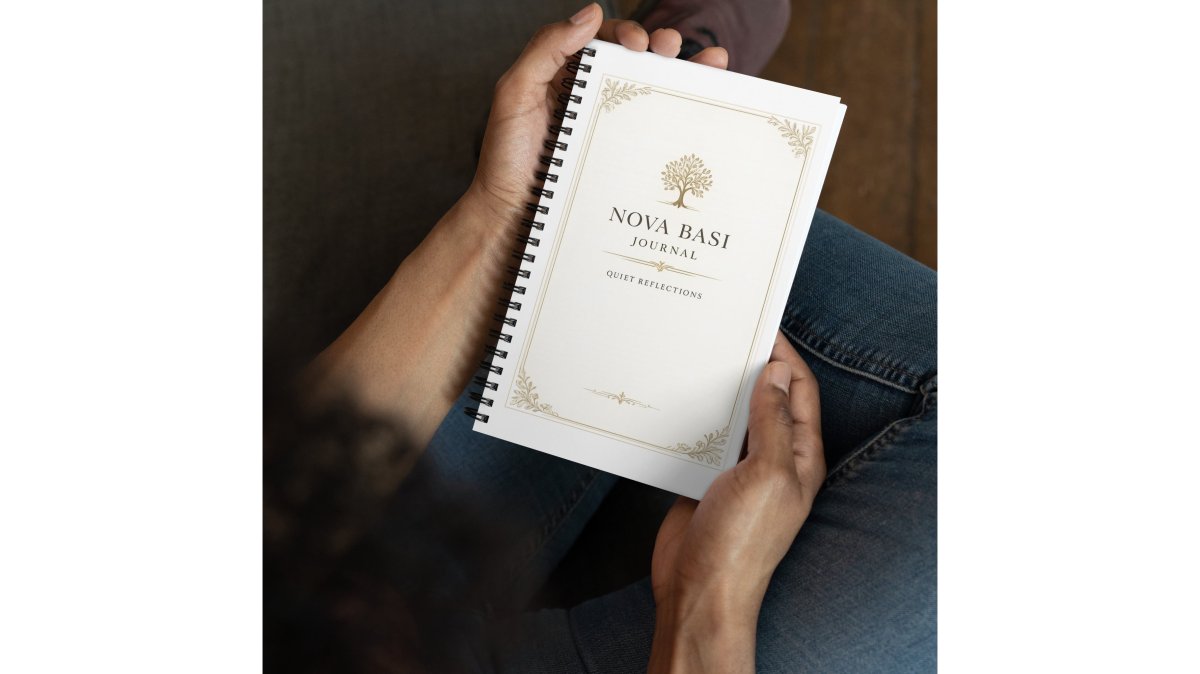
For people who respond to atmosphere, scent, and texture, a physical object often makes the practice stick because it does the remembering for you. Our spiral notebook has 140 dotted pages and a soft-touch cover, sized at 5.5 by 8.5 inches, small enough to live on a nightstand. A white glossy mug anchors the morning sequence, since the practice begins when the cup is in your hands. A decorative copper candle marks the end of the workday with a scent and a flame rather than a notification.

What the evidence does and does not support
Mindfulness research is real but often overstated in marketing. The National Center for Complementary and Integrative Health notes that meditation and mindfulness practices are generally considered safe for healthy people and may help with stress and related symptoms, while cautioning that the evidence base varies by outcome and that these practices are not a substitute for medical care. Expect modest, gradual changes, a slightly longer pause before you react, easier sleep onset, less rumination, not a transformation in a week.
Track progress without turning it into a performance goal
Mindfulness has no single measurable outcome, so avoid streak counters and scores. A lightweight alternative is a one-word margin note each day, "steady," "scattered," "tired," "calm", and a glance back at month's end. Look for patterns in consistency and perceived benefit, not a number to beat. If tracking feels like a chore, stop; the practice matters more than the record of it.
Troubleshooting: When Mindfulness Tools Stop Working
The practice has not failed when it stops feeling good. It has simply become routine, and routine is the point.
Common barriers and what to do about them:
- "I don't have time." Shrink the practice rather than skipping it. One breath at a red light still counts.
- "My mind won't settle." A wandering mind is not a failed session. Noticing the wandering is the exercise.
- "I missed three days." Resume today. There is no streak to protect and no penalty for the gap.
Accessibility matters here too. Anyone who cannot sit comfortably can practice lying down or in a supported chair; anyone who finds silence difficult can use a guided session or ambient sound.
National Center for Complementary and Integrative Health on meditation and mindfulness
Conclusion: Build a Routine You Can Keep
The hard part is not learning to breathe. It is keeping a practice alive through a week that does not want you to have one. Pick a single cue, attach it to something you already do, and let the tool carry the decision.
That is the idea behind everything we make at Nova Basi. Our novellas, journals, and keepsakes exist so a moment of quiet has somewhere to land: a story to slow the evening, a notebook for one honest sentence, a candle to close the day.
Frequently Asked Questions
How long should I practice mindfulness each day?
Start with three to five minutes daily and build from there. Consistency matters more than duration, so a short daily practice you actually keep beats a long one you skip. Try one minute of breath awareness before coffee, then add a two-minute pause after lunch. Once that feels natural, extend to ten minutes. Many beginners find that pairing a short practice with an existing habit, like brushing teeth or waiting for the kettle, makes it stick without adding a separate task to the day.
What mindfulness tools can beginners use at home or work?
At home, a journal for prompts and a comfortable chair are enough. At work, use your calendar as a cue: set two-minute reminders for breath awareness between meetings, or try traffic light meditation at stoplights. A guided meditation app helps if you prefer audio, and a small notebook like Nova Basi's journal ($13.00) works for quick reflections. Keep tools visible so they act as routine cues, and start with one or two rather than collecting a shelf of unused items.
How do I create a daily mindfulness routine that actually sticks?
Anchor practices to things you already do. Pair morning mindfulness exercises with your first cup of coffee, use elevator breathing on the way to your desk, and add a short walk after lunch. Keep each practice under five minutes at first. Track your streak in a journal, but treat missed days as information rather than failure. The goal is a routine that fits your existing day, not a separate schedule that competes with it.
Does mindfulness help with stress and sleep?
Research on mindfulness-based programs suggests moderate improvements in perceived stress and sleep quality for many people, though results vary and no practice replaces medical care. For sleep, try a body scan or breath awareness in bed, or use sleep sounds if silence feels uncomfortable. Keep the practice simple: notice tension, breathe slowly, and let thoughts pass without chasing them. If sleep problems persist, talk with a healthcare provider.
Are mindfulness apps worth the cost, and what about privacy?
Apps can help with guided sessions, but check the price and privacy policy before subscribing. Many offer free tiers with limited content, and some sell or share usage data. If privacy matters to you, a paper journal avoids that concern entirely. Nova Basi's dotted notebook ($13.00) is a one-time purchase with no subscription. Whichever you choose, the tool matters less than using it regularly.
What are some simple mindfulness exercises for everyday routines?
Try dishwashing with full attention on warmth and texture, a one-minute breath pause before opening email, or mindful eating for the first three bites of a meal. On commutes, do traffic light meditation: at each red light, relax your shoulders and take one slow breath. These micro-practices fit inside activities you already do, so they require no extra time and are easier to repeat than longer sessions.