Why Slow Living Matters: A Guide to Intentional Life
Table of Contents
- What Slow Living Means in a Digital-First World
- How Slow Living Matters for Physical Health
- The Mental Health and Stress Reduction Impact
- How to Practice Slow Living in Your Daily Routine
- Core Benefits of Slow Living for Modern Life
- Essential Slow Living Principles to Guide Your Choices
- Why Slow Living Matters When Everything Feels Urgent
- Frequently Asked Questions
Last Updated: September 3, 2026
What Slow Living Means in a Digital-First World
Slow living matters because it offers a deliberate counterweight to the relentless pace of modern life. In a world where notifications ping constantly and productivity is measured in microseconds, slow living means making intentional choices about how you spend your time and attention. It's not about doing nothing, it's about doing what actually matters to you, with full presence and care.
The paradox of slow living in a digital-first economy is this: the tools designed to save us time have instead fragmented our attention. We move faster but feel less grounded. Nova Basi recognizes this tension, offering stories and rituals that help you reclaim agency over your own pace. Slow living matters most precisely when everything around you demands speed.
How Slow Living Matters for Physical Health
The body responds directly to pace through measurable physiological pathways that slow living activates. When you slow down, your parasympathetic nervous system, the branch responsible for rest and recovery, begins to dominate over the sympathetic nervous system's fight-or-flight response. This isn't metaphorical; it's a shift in autonomic balance that shows up in your heart rate, blood pressure, and hormone levels.
The vagus nerve, the longest cranial nerve in your body, acts as the primary highway for this parasympathetic activation. When you practice slow living activities, sustained reading, deliberate breathing, mindful movement, you're directly stimulating vagal tone, which improves your body's ability to shift out of stress mode. Research from the National Institutes of Health demonstrates that vagal stimulation lowers cortisol, the primary stress hormone, while increasing heart rate variability (HRV), a marker of cardiovascular resilience.
Chronic stress keeps your hypothalamic-pituitary-adrenal (HPA) axis in overdrive. This system, when constantly activated, elevates cortisol and adrenaline, leading to sustained inflammation, weakened immune function, and accelerated aging at the cellular level. Slow living practices interrupt this cycle by giving your HPA axis regular periods of downregulation. Your muscles release tension. Your breathing deepens naturally. Your digestive system, suppressed during stress, resumes normal function.
Many practitioners report measurable changes within weeks: improved sleep quality (because elevated cortisol disrupts sleep architecture), better digestion (because the parasympathetic nervous system controls the "rest and digest" response), and reduced physical tension (because chronic muscle contraction finally releases). These aren't anecdotal, they reflect the body's genuine physiological response to sustained slowness.
The cardiovascular benefits are particularly significant. Elevated blood pressure and resting heart rate are among the most reliable predictors of cardiovascular disease. Slow living practices that activate the parasympathetic nervous system directly lower both. A consistent practice of intentional, unhurried activities creates a foundation where your cardiovascular system operates from a baseline of calm rather than constant alert.
The Mental Health and Stress Reduction Impact
Mental clarity emerges when overwhelm recedes. Slow living matters for mental health because it directly addresses the root cause of modern anxiety: too many demands competing for your finite attention. When you practice slow living, you're not just managing stress, you're restructuring how you relate to time itself.
Mindfulness and presence, core elements of slow living, strengthen your ability to regulate emotions. Instead of reacting to every stimulus, you create space between impulse and action. This is where genuine agency returns. You become the author of your day rather than a character swept along by circumstances.
Psychological resilience builds through consistent practice. The rituals and keepsakes that Nova Basi offers aren't decorative, they're anchors that remind you to pause, to breathe more deeply, to reconnect with what matters. When you finish a novella designed for slow reflection, the experience lingers. That lingering quality is the point. It keeps you tethered to intentional living even when external demands surge.
How to Practice Slow Living in Your Daily Routine
Start where you are. You don't need a retreat in Southern France to begin. Slow living matters in your actual life, with your actual schedule.
1. Establish a morning ritual (10-15 minutes): Before checking your phone, sit with a warm beverage and an open journal. Write three things you intend to do today with full attention. This simple act reclaims your morning from reactive mode.
2. Create a reading sanctuary: Designate one quiet space, a corner, a chair, a windowsill, where you read without distractions. No devices. No multitasking. Stories like those from Nova Basi are designed to deepen this practice, offering narratives that reward sustained attention.
3. Practice time-stretching: One hour of undivided focus feels longer than three hours of fragmented work. Choose one activity daily, reading, writing, a walk, where you're fully present. This rewires your perception of time itself.
4. Build transition rituals: Between work and rest, create a deliberate pause. Light a candle. Make tea. Change your clothes. These small acts signal to your nervous system that you're shifting gears.
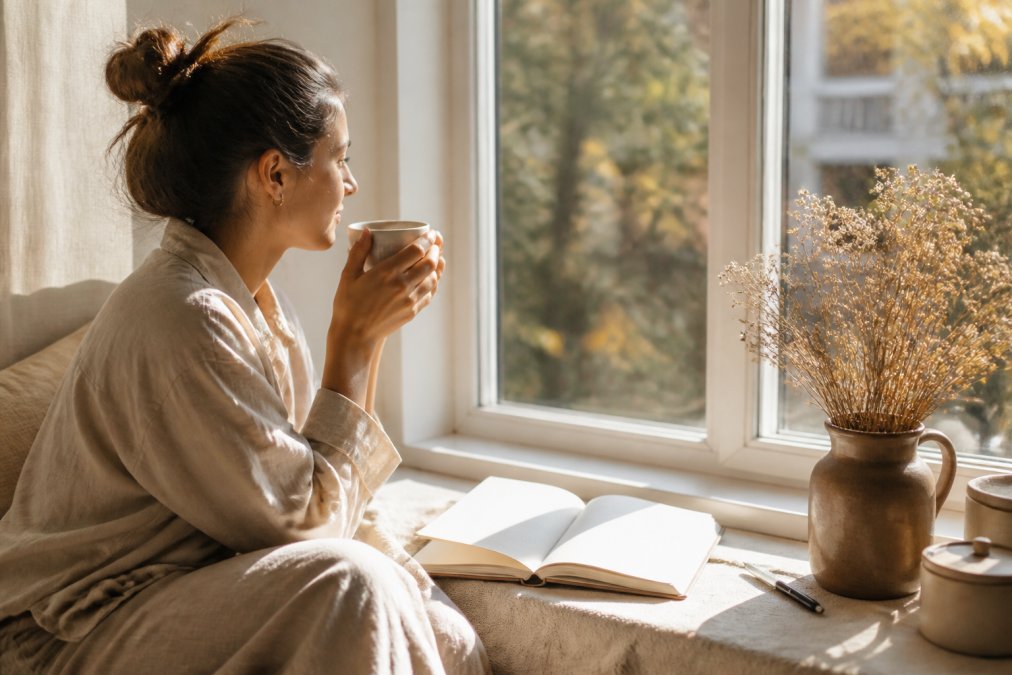
5. Curate your keepsakes: Surround yourself with objects that anchor you to intentional living. A journal that invites reflection. A bookmark from a story that moved you. These aren't clutter, they're reminders of who you want to be.
Core Benefits of Slow Living for Modern Life
Slow living matters because it delivers benefits that no productivity hack can replicate. When you slow down, you gain something that speed cannot offer: presence. And presence is where meaning, and sustainable choice, lives.
Reclaimed agency: You stop being a passenger in your own life. Slow living practices restore your ability to choose. Choose what deserves your attention. Choose how you spend your finite hours. This agency extends beyond time into consumption: when you slow down, you naturally question impulse purchases, fast fashion, and disposable goods. You become intentional about what enters your home and your life.
Emotional regulation: Chronic overwhelm damages your capacity to feel clearly. Slow living restores it. You can distinguish between real problems and manufactured urgency. You can respond thoughtfully instead of reacting defensively. This emotional clarity often leads to more sustainable choices, you're less likely to consume to soothe anxiety when you've addressed the anxiety itself.
Sustainable habits: Slow living principles create practices you can actually maintain. Unlike aggressive productivity systems that burn you out, slow living builds resilience. You're working with your nervous system, not against it. This same principle applies to environmental choices: slow fashion (buying fewer, higher-quality pieces), slow consumption (choosing durable goods over disposable ones), and slow food (cooking intentionally rather than relying on convenience) all emerge naturally from a slow living mindset. These aren't sacrifices; they're expressions of the same intentionality you're practicing elsewhere.
Connection to beauty and material meaning: When you slow down, you notice things. The light through a window. The texture of paper. The particular way a character speaks in a story. This attention to beauty is restorative. It also shifts how you relate to objects. Instead of accumulating things, you curate them. Instead of treating possessions as disposable, you develop genuine relationships with the items in your life. This is the intersection of slow living and minimalism: not deprivation, but intentional curation. A well-made journal you use for years carries more meaning than ten cheap notebooks you discard. A single quality garment worn repeatedly with care replaces the cycle of fast fashion.
Environmental alignment without sacrifice: Slow living naturally aligns with environmental sustainability because both reject the extraction-consumption-disposal model. When you practice slow living, you're already thinking in terms of durability, quality, and long-term value. You're already questioning whether you actually need something before acquiring it. You're already more likely to repair, repurpose, and keep things longer. These choices reduce your consumption footprint not through guilt or restriction, but through a fundamental shift in how you relate to time, attention, and material goods.
Essential Slow Living Principles to Guide Your Choices
Slow living matters because it rests on principles that actually work. These aren't abstract ideals, they're practical guides for daily decisions.
Intentionality over impulse: Before you say yes to something, ask: Does this align with what matters to me? Slow living means your calendar reflects your values, not just external demands.
Quality over quantity: One deeply engaging book beats ten skimmed articles. One meaningful conversation beats a dozen surface-level interactions. One ritual practiced consistently beats ten abandoned experiments.
Presence over productivity: The goal isn't to accomplish more, it's to be more fully alive in what you're doing. This shift in orientation changes everything.
Simplification as liberation: When you remove excess, excess commitments, excess possessions, excess noise, you create space for what actually matters. Nova Basi's philosophy centers on this principle: curated collections that serve slow living rather than clutter it.
Why Slow Living Matters When Everything Feels Urgent
The most important reason slow living matters is this: urgency is often an illusion. Most of what feels urgent isn't actually time-sensitive. It just feels that way because you're operating in a state of constant alert.
When you practice slow living, you develop the capacity to distinguish between real deadlines and manufactured pressure. You can say no to things that don't serve you. You can protect your attention like the finite resource it is.
According to research on attention and well-being from the American Psychological Association, people who practice mindfulness and intentional living report significantly higher life satisfaction. The data supports what slow living practitioners already know: presence changes everything.
The nervous system regulation that comes from slow living practices creates a foundation for resilience. You're not just managing stress in the moment, you're building capacity to handle future challenges from a grounded place rather than a reactive one.
Slow living matters because it's an act of resistance against a culture that profits from your distraction. It's a reclamation of your own time, your own attention, your own life. Every morning ritual, every uninterrupted hour of reading, every moment of genuine presence is an assertion that your time belongs to you.
Studies on chronic stress and health outcomes from the National Institutes of Health demonstrate that sustained stress reduction practices improve cardiovascular health, sleep quality, and immune function. Slow living isn't just emotionally restorative, it's physiologically protective.
The rituals and stories that Nova Basi offers are designed specifically for this work. They create the conditions where you can actually practice slow living, even amid demanding schedules. A novella crafted for slow reflection. A journal that invites genuine introspection. Keepsakes that remind you, each day, of your commitment to intentional living.
Slow living matters because it offers something the digital economy can't provide: genuine rest. Not rest as downtime you squeeze between obligations, but rest as a fundamental way of moving through the world. If you're ready to practice slow living with intention and depth, Nova Basi's collection of emotionally resonant novellas and curated rituals creates the perfect foundation. Each story is designed to slow your pace and deepen your presence. Explore how thoughtfully crafted narratives and meaningful keepsakes can transform your daily routine into a lived practice of intentional living. Research on narrative therapy and emotional well-being from the Journal of Counseling Psychology shows that engaging stories create lasting shifts in how people relate to themselves and their lives. Start with one story. Let it change how you move through your days.
Frequently Asked Questions
How does slow living actually reduce stress for busy professionals?
Slow living reduces stress by lowering cortisol levels through intentional pacing and mindfulness practices. When you deliberately slow down activities like eating, working, or moving through your day, your nervous system shifts from a constant fight-or-flight state into a calmer rhythm. This physiological shift improves emotional regulation and builds resilience against chronic stress, allowing your body to recover between demanding work periods.
What are the key principles of slow living I should start with?
The foundational slow living principles include intentionality (making conscious choices about how you spend time), simplification (removing unnecessary commitments and possessions), presence (giving full attention to what you're doing), and pacing (allowing adequate time for activities without rushing). These principles work together to help you reclaim agency over your daily habits and create sustainable routines that support both mental wellness and physical health.
Can slow living actually work for someone with a demanding job?
Yes. Slow living doesn't require abandoning your career, it means creating small pockets of intentional calm within your existing schedule. Even 15 minutes of mindfulness, a tech-free dinner, or a walk without your phone can activate your parasympathetic nervous system and reduce overwhelm. Many busy professionals use curated rituals and keepsakes as anchors for these moments, helping them decompress after work and maintain mental clarity despite high-stress demands.
How does slow living connect to environmental sustainability?
Slow living naturally aligns with sustainability because intentional living often means consuming less, choosing quality over quantity, and being mindful of your impact. When you slow down, you're more likely to buy fewer things that last longer, reduce waste, and make conscious choices about resources. This lifestyle design supports both personal well-being and environmental responsibility, creating a meaningful connection between how you live and the world around you.
This article was written using GrandRanker