Which Books Actually Help Reduce Daily Stress?
Last Updated: October 29, 2026
Quick Summary
The daily stress books that help most are quiet, unhurried stories that hold your attention on one thread instead of scattered distractions. Slow novellas and gentle narratives work well after a demanding day, while clinically informed workbooks suit anxious thoughts that keep looping. Match the book's tone and length to your current stressor.
- Calm, reflective, or emotionally warm books suit stress relief better than cliffhanger thrillers.
- A novella of roughly 100 to 200 pages can be finished across a few evenings.
- Avoid reading on a bright phone screen right before sleep; a paper book or dimmed e-reader works better.
- Read the first two or three chapters on a calm evening and notice how your shoulders feel afterward.
- Use a fixed 20-minute reading window and stop at the timer to build a sustainable routine.
Table of Contents
- How to Choose the Best Stress Management Books for Your Life
- Novellas for Slowing Down: Earthstar Bright, Earthsong of Fréjus-sur-Mer, and Timeless in Roussillon
- Books for Stress and Anxiety When Your Mind Won't Settle
- Books for Relaxation and Mindfulness: Pairing Stories With Simple Rituals
- Comparing Time, Format, and Effort: What Each Option Asks of You
- Building a Simple Reading Routine for Your Evenings
- Frequently Asked Questions
Stress builds in small, ordinary ways: an inbox that never empties, a commute that runs long, a phone that buzzes at dinner.
Reading is a practical stress tool because it demands a different attention than work does.
Scrolling feeds you short, unpredictable bursts.
Not every book will do this. A thriller with a cliffhanger every chapter may keep you hooked but also keep your pulse up.
Watch out: reading in bed on a bright phone screen right before sleep can undo the calm the book provides (The inner clock, Blue light sets the human rhythm).
How to Choose the Best Stress Management Books for Your Life
The best stress management book fits your current stressor, not the one with the most awards.
Pay attention to tone and pace before you commit. A reflective, slow-moving novel suits someone who needs to decompress; gentle humor suits someone who needs lightness.
Length matters too.
Format is a practical question.
Finally, trust your own reaction. If a book leaves you more agitated after a few pages, put it down and try something else.
| Your Main Stressor | Type of Book to Try | What to Look For |
|---|---|---|
| Work pressure | Slow, reflective fiction | Calm pacing, short chapters |
| Anxious or looping thoughts | Gentle, grounded narratives | Present-focused, unhurried tone |
| Major life transition | Stories about belonging | Emotional warmth, a sense of home |
| Low energy at night | Short novellas | Finishable in a few sittings |
Novellas for Slowing Down: Earthstar Bright, Earthsong of Fréjus-sur-Mer, and Timeless in Roussillon
Nova Basi's novellas are written for readers who want a quieter pace. Earthstar Bright is a story of awakening and remembering, set in the luminous landscapes of Southern France. Read the novella Earthstar Bright to see the full story. Earthsong of Fréjus-sur-Mer is set in a sun-warmed coastal town and focuses on earth, song, and the quiet magic of place. Explore Earthsong of Fréjus-sur-Mer for yourself. Timeless in Roussillon, set in an ochre-dusted village, explores time, stillness, and the value of being present. Discover Timeless in Roussillon and its unhurried pages.


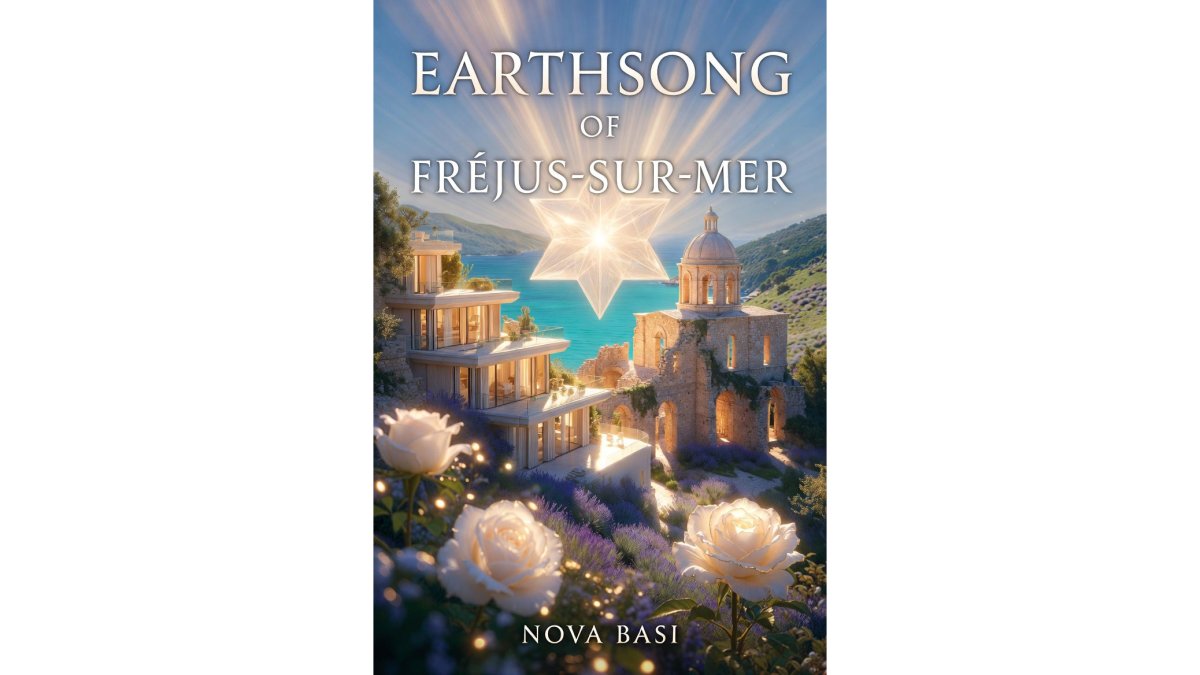
All three are available as Kindle editions on Amazon and as EPUB editions on Payhip, so you can choose the format that suits your evenings. If you want more slow European-setting reads, see Books About European Landscapes: A Curated Reading List. Each runs at a gentle, unhurried pace, making it easy to read a few pages and set the book down without feeling you have abandoned a plot.
If you are new to slow reading, Timeless in Roussillon is a natural starting point, since its theme of presence maps onto noticing your surroundings. Earthsong of Fréjus-sur-Mer suits readers who respond to place and atmosphere.
To test whether a novella suits you, read the first two or three chapters on a calm evening and notice how your shoulders feel afterward. If they feel lower and your thoughts less crowded, the book is working. If you feel restless, try a different one.
American Psychological Association guidance on stress and coping
Books for Stress and Anxiety When Your Mind Won't Settle
When anxious thoughts keep circling, the right book can act as a gentle interruption rather than a cure. A book cannot replace professional care for persistent anxiety, but it can give your mind a steady anchor for a short time. The most useful choices tend to be grounded, present-focused narratives rather than stories built on suspense.
Clinically informed options
A few well-known titles are written by clinicians or based on established therapeutic approaches, which makes them a reasonable starting point if you want structure rather than atmosphere:
Gift Set - Spa Lavender & Rosemary - 1 Piece - MADE TO ORDER →
- "Feeling Good" by David D. Burns, MD, a classic cognitive behavioral therapy (CBT) self-help book that walks through identifying and reframing distorted thoughts. Dense and exercise-heavy, it suits readers who want a workbook-style approach rather than a story.
- "The Anxiety and Phobia Workbook" by Edmund J. Bourne, PhD, a long-standing, exercise-driven guide covering relaxation, cognitive restructuring, and exposure. Best for readers who want a reference they can dip into chapter by chapter.
- "Full Catastrophe Living" by Jon Kabat-Zinn, the foundational book on Mindfulness-Based Stress Reduction (MBSR), an eight-week program developed at the University of Massachusetts Medical School. Long (roughly 600 pages in most editions) and best treated as a course rather than a weekend read.
- "Unwinding Anxiety" by Judson Brewer, MD, PhD, applies habit-loop science to anxious patterns, focusing on noticing and stepping out of worry cycles. Shorter and more narrative than the workbooks above.
Gentle narrative options
If a workbook feels like more homework, grounded fiction and memoir can lower the barrier. Many readers with racing thoughts find books about everyday routines, landscapes, or quiet relationships easier to follow than complex plots. The aim is not to stop thinking but to give your attention a single, manageable thread.
How to read when your mind won't settle
Pair the book with a simple coping habit. Before you begin, take three slow breaths, or set a timer for 20 minutes so you are not tempted to keep going past your limit. These small steps make reading a predictable part of the evening, which is itself calming. If you choose a workbook, pick one exercise per sitting rather than a whole chapter, the goal is completion, not coverage.
National Institute of Mental Health information on anxiety disorders
Books for Relaxation and Mindfulness: Pairing Stories With Simple Rituals
Mindfulness and reading fit together because both ask you to stay with one thing at a time. A slow novella becomes a mindfulness practice when you read with intention: notice the scent of the setting, the rhythm of the sentences, and how your body feels as you turn each page. The point is not to empty your mind but to return to the page each time it wanders.
A short, structured reading-and-practice plan
Instead of treating a book as a one-off purchase, try a two-week plan that turns reading into a manageable daily action:
- Days 1-2, Set the container. Choose one fixed 20-minute window (after dinner or before bed). Put the book where you will see it. Decide in advance that you will stop at the timer, even mid-chapter.
- Days 3-5, Read with one anchor. Pick a single sensory anchor per session: the feel of the page, the sound of your breathing, or the rhythm of the prose. When you drift into planning, return to the anchor and the next sentence.
- Days 6-9, Add a two-minute close. After reading, sit for two minutes and note one image or line that stayed with you. Brief and repeatable, it is easy to skip on hard days without breaking the habit.
- Days 10-14, Review and adjust. Ask whether the routine left you calmer, neutral, or more restless. If restless, switch to a shorter book or a different time of day. If calmer, keep the same window for another two weeks.
Making the ritual accessible
A ritual does not require special products. It can be as simple as a specific chair, a cup of tea, or a paper bookmark. If you want a physical cue, Nova Basi's journals and lavender-and-rosemary bath items can serve that role. The Lavender & Rosemary Spa Gift Set bundles an exfoliant body polish, a solid shampoo, a solid soap, a sisal soap saviour, and a bamboo spoon, and it is made to order.
Inclusive and low-cost options
Not every reader wants a physical ritual, and not every budget allows one. Short-form options, a single essay, a poem, or one chapter, work for readers with limited attention or energy. If long text is a barrier, a 10-minute audio chapter counts as practice.
Comparing Time, Format, and Effort: What Each Option Asks of You
Each option asks something different. A novella asks for a few evenings of steady attention. A journal asks for a few minutes of writing whenever you feel like it.
Here is a practical comparison to help you decide:
| Option | Time Commitment | Effort Level | Best For |
|---|---|---|---|
| Novella (digital, $2.99) | 1 to 3 evenings | Low | Winding down after work |
| Journal ($13.00) | 5 to 10 minutes a day | Low to medium | Sorting thoughts |
| Organic Body Polish Exfoliant ($19.95) | 2 to 3 minutes per use | Low | A sensory bath or shower ritual |
| Organic Solid Soap ($6.32) | Part of your usual routine | Very low | Simple daily grounding |
| Spa Gift Set ($38.94) | Use across several weeks | Low | A complete ritual in one purchase |
The novellas are the lowest-cost entry point at $2.99 each, while the gift set bundles several items for a single price. If your evenings are very full, start with one novella or the solid soap, since both fit into existing habits.
Be realistic about your schedule.
Building a Simple Reading Routine for Your Evenings
A reading routine works best when it is small, fixed, and easy to repeat.
Here is a simple routine to try for two weeks:
- Set a fixed start time, ideally at the same point each evening.
- Read for 20 to 30 minutes, without checking messages.
- Finish with one line in a journal, noting how you feel.
- Review after two weeks. If the routine feels like a chore, shorten it.
Track how you feel rather than how much you read. A common mistake is setting a goal, such as finishing a book each week, that turns relaxation into another obligation.
Nova Basi's novellas and keepsakes are designed to help you slow down and find beauty in the ordinary. Start with one story and one quiet evening.
Frequently Asked Questions
What are the best books for reducing daily stress?
The strongest picks are quiet, immersive stories that let you step out of your day for a while. Nova Basi's novellas, including Earthstar Bright (set in Southern France), Earthsong of Fréjus-sur-Mer, Timeless in Roussillon, and The Sacred Sicilian Rose Line, are built around stillness, place, and being present. Each is $2.99 in Kindle or EPUB format. Choose the setting that appeals to you most, since a story you look forward to returning to matters more than any single title on a list.
Can reading help reduce stress?
Reading can give your mind a break from work demands and looping thoughts, especially when the material is absorbing rather than stressful. Slow, emotionally resonant fiction tends to work best for this because it asks little of you beyond attention. Pairing a session with a consistent ritual, such as a cup of tea, can help signal that the day is ending. Reading is one helpful habit among several, not a replacement for other support.
What is a good book to read when you feel overwhelmed?
When you feel overwhelmed, pick something short and gentle that does not demand much plot tracking. A novella such as Timeless in Roussillon, which centers on stillness and being present, is a practical choice because you can finish it in a few evenings. Read for just 15 to 20 minutes at a time, and stop when your attention drifts. The goal is a small pocket of calm, not finishing quickly.
Are self-help books effective for managing stress?
Self-help books can offer useful perspective and practical tools, but results vary with the reader and the stressor. Fiction works differently: it offers emotional grounding and a break from the pressure of your own thoughts rather than step-by-step instruction. Combining a calming story with simple habits, like a daily journal entry, can offer both reflection and rest. If stress is persistent or interferes with daily life, speaking with a licensed professional is a sensible next step.