How to Use an Intentional Living Journal for Clarity
Last Updated: October 24, 2026
Quick Summary
An intentional living journal is a notebook you use on purpose, with short prompts that turn scattered thoughts into clear choices about how you spend your time. Start with three prompts, not thirty, answering each in two or three sentences, and turn the answer into one visible choice.
- A diary records what happened, while an intentional living journal asks what you want to happen next.
- Choose a prompt by asking how much time you have and which area of life is loudest right now.
- A completed entry has a want, a no, and one proof line you check at your next review.
- Set aside twenty minutes on a Sunday for a weekly review with three intentions at most.
- Attach each intention to a when, a then, and a proof so follow-through is visible.
Table of Contents
- Why an Intentional Living Journal Changes How You Spend Your Days
- Intentional Living Journal Prompts to Start With
- Daily Journal Prompts for Self-Reflection That Take Ten Minutes
- Slow Living Journal Prompts for Draining Days
- Bullet Journal Ideas for Intentional Living and Weekly Review
- How to Turn Journal Intentions Into Follow-Through
- Prompts for Hard Seasons, Transitions, and Different Lives
- Choosing a Journal and Building a Ritual You Will Keep
- Frequently Asked Questions
Why an Intentional Living Journal Changes How You Spend Your Days
An intentional living journal is a notebook you use on purpose, with short prompts that turn scattered thoughts into clear choices about how you spend your time. At Nova Basi, we think of it less as record-keeping and more as a quiet conversation with yourself. Research on journaling and wellbeing from Harvard Health Publishing suggests that writing about your thoughts can help you process stress and gain perspective.
What Makes This Different From a Diary
A diary records what happened. An intentional living journal asks what you want to happen next. A diary says, "Today was hard." A journal says, "Today was hard, and here is what I will protect tomorrow." That single shift turns writing into a tool for personal growth rather than a log of events.
Intentional Living Journal Prompts to Start With
Start with three prompts, not thirty. Answer each in two or three sentences, and stop. The goal is a clear head, not a full page. What separates a useful intentional living journal from a stalled one is not the number of prompts you collect, it is whether you can pick the right prompt for the ten minutes you actually have and turn the answer into one visible choice.
Use this quick-reference structure to choose a prompt by the time you have and the area of life that needs attention. Pick one row, answer it, and stop.
| Time available | Work and priorities | Relationships | Health and energy | Personal direction |
|---|---|---|---|---|
| 2 minutes | What is the one task that would make today feel finished? | Who have I not thanked lately, and why? | What does my body need in the next hour? | What do I want more of this week, and what will I say no to? |
| 10 minutes | Which of my values showed up at work today, and which one went quiet? | Where did I feel most like myself around other people this week? | What gave me energy this week, and what drained it? | What would I do this month if I trusted myself more? |
How to Choose a Prompt in Under a Minute
Ask two questions: How much time do I have, and which area of life is loudest right now? If you have two minutes, take the 2-minute cell in the loudest column. If you have ten, take the 10-minute cell. Do not browse the whole table, browsing is how a journal session turns into scrolling.
What a Finished Answer Looks Like
A completed entry is shorter than most people expect. Here is a realistic example for the 2-minute personal-direction prompt, "What do I want more of this week, and what will I say no to?"
I want more unhurried mornings. I will say no to the 7 a.m. call I usually accept out of habit, and I will leave my phone in the kitchen until I have had coffee.
Notice the shape: a want, a no, and one proof line. That is enough.
Prompts for Clarifying Values and Priorities
Values are the filter for every choice. Write one sentence for each:
- Energy: What gave me energy this week, and what drained it?
- People: Who did I feel most like myself around?
- Time: Where did my hours actually go, versus where I wanted them to go?
Read your answers back once a week. Patterns show up fast, and they usually surprise you. If a value never appears in your answers, that is information too, it usually means the value is aspirational rather than lived, and the next step is to shrink it into one action you can actually take this week.
Daily Journal Prompts for Self-Reflection That Take Ten Minutes
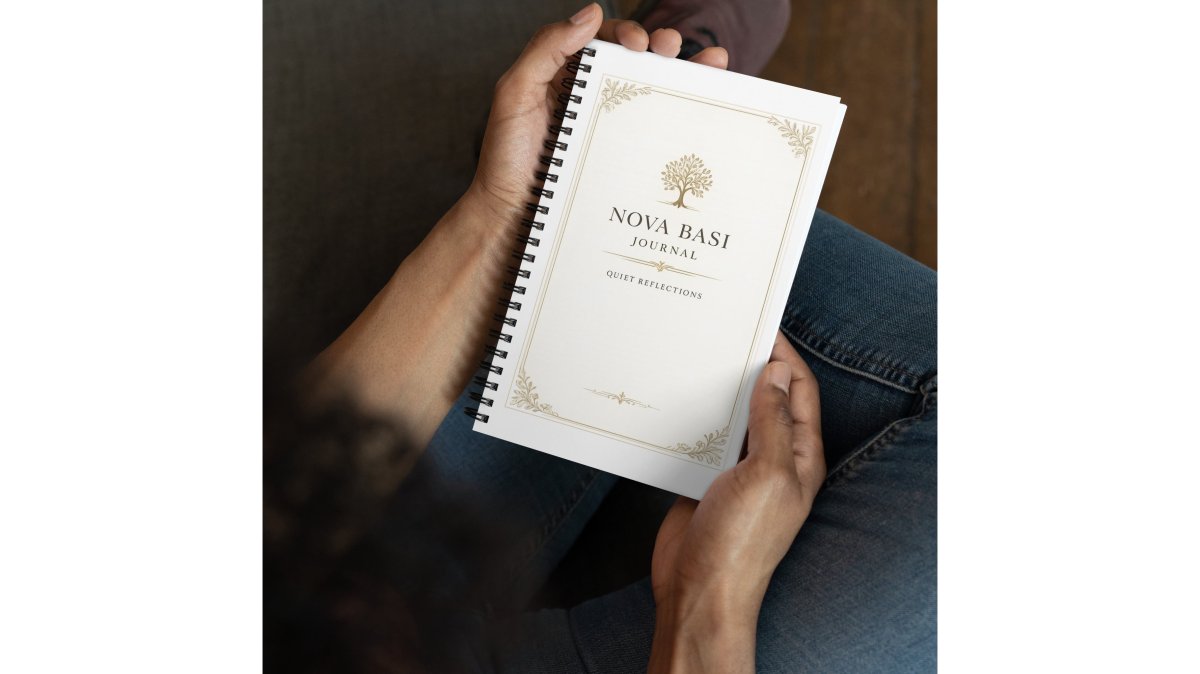
Ten minutes is enough if you keep it simple. A common approach is three minutes of writing, two minutes of reading it back, and five minutes of planning one small action. Try these daily journal prompts for self-reflection:

- What is one thing I want to carry into today?
- What am I grateful for right now, even if it is small?
- How am I actually feeling, and what does that feeling need?
The last question matters most. Reflection without a next step becomes rumination, and rumination rarely helps.
Slow Living Journal Prompts for Draining Days
Some days you have nothing left. On those days, write less, not more. If digital overload is the cause, a short break from screens before you write can make the page easier to face, and the American Psychological Association notes that even brief stress-reduction practices can ease tension.
Slow living journal prompts for hard evenings:
- What can I let go of tonight?
- What was one beautiful thing I noticed today?
- What do I need to hear right now, in my own words?
Watch out: don't use a draining day to relitigate old decisions. Keep the pen moving forward, not backward.
Bullet Journal Ideas for Intentional Living and Weekly Review
A weekly review is where an intentional living journal earns its keep. Set aside twenty minutes on a Sunday. Look back at the week, then look forward. The difference between a review that changes behavior and one that becomes a pleasant ritual is a short, repeatable loop: review the proof lines from last week, choose three intentions, attach each to a cue, and schedule the next check-in.
Bullet journal ideas for intentional living that stay useful:
- A short list of weekly intentions, three at most
- A mood tracker with one dot per day
- A "drained by / filled by" page
| Page | What Goes In It | When You Use It |
|---|---|---|
| Weekly intentions | Three priorities, one per line, each with a when/then/proof line | Start of week |
| Mood tracker | One dot per day, five moods | Daily, ten seconds |
| Drained by / filled by | Two columns, quick notes | End of week |
| Habit grid | One or two habits only | Daily check-off |
| Proof column | A yes/no or a number for each intention | End of week |
The Twenty-Minute Weekly Review, Step by Step
- Minutes 0-5: Read last week's proof lines. For each intention, mark yes, no, or partial. Do not explain yet, just mark.
- Minutes 5-10: Ask one diagnostic question per miss. Was the cue unclear, the action too big, or the intention not actually important this week? Write one sentence per miss.
- Minutes 10-15: Choose next week's three intentions. Pull from your values prompts and your drained-by/filled-by page. Three is the ceiling, not the target.
- Minutes 15-20: Attach a cue and a proof line to each. Use the when/then/proof format from the follow-through section below. Put the review itself on next week's calendar before you close the notebook.
Worked Example: From Reflection to Follow-Through
Suppose your drained-by/filled-by page shows that evenings on your phone leave you flat, and your values prompt shows that "presence" keeps going quiet. A weak intention is "be more present." A working intention looks like this:
When I sit down on the couch after dinner, then I put my phone in the drawer and leave it there until the kitchen is cleaned up. Proof: four out of seven evenings this week.
At the next review, you mark the proof line. If you hit four, keep the intention and consider raising it to five. If you hit one, shrink the action, for example, phone in the drawer for ten minutes only, rather than scolding yourself. The proof line is the mechanism; the reflection is only the input.
A Low-Energy Version for Unpredictable Weeks
Some weeks do not allow twenty minutes. Keep a two-line review: one thing that worked, one thing to try next week. Write it on the same page as your mood tracker so you do not need a separate setup. The loop still holds, review, choose, attach a cue, check the proof, it is just smaller.
How to Turn Journal Intentions Into Follow-Through
Intentions die without a trigger. The fix is to attach each intention to a specific moment, a specific action, and a specific person or place. A Duke University research summary on habit formation points to the same idea: habits stick when cues and context do the remembering for you.
Try this format for every intention you write:
- When: the exact moment or cue
- Then: the smallest version of the action
- Proof: how you will know it happened
Check the proof line at your next weekly review. If it did not happen, shrink the action rather than scolding yourself.
Prompts for Hard Seasons, Transitions, and Different Lives
Not every journal is written from a calm place. Some are written in the middle of a move, a job change, a loss, or a long stretch of plain exhaustion. These prompts meet you where you are:
- What is one thing that still feels steady?
- What do I need from the people around me, and have I told them?
- What am I allowed to pause right now?
There is no correct answer here. Write the honest one. If difficult feelings keep returning and daily life feels hard to manage, talking with a licensed mental health professional is a sensible next step, and the National Institute of Mental Health has plain-language guidance on when to reach out.
Choosing a Journal and Building a Ritual You Will Keep
The best journal is the one you will actually open. Our dotted spiral journal is a simple, low-pressure place to start, and if you want help turning writing into a habit, our guide on how to create a daily ritual walks through it gently.
Keep the ritual small. If you want the wider philosophy behind the habit, our piece on why slow living matters explains the thinking. And when you want tools to support a short practice, this guide to mindfulness tools for daily routines pairs well with a ten-minute page.
Frequently Asked Questions
What should I write in an intentional living journal?
Start with three short blocks: what you want the day to feel like, one thing you are choosing to protect, and one thing you are willing to let go of. From there, add a weekly page for priorities and a short evening line about what actually happened. The point is not volume. A few honest sentences about values, energy, and choices will do more than a page of description, and it keeps the habit light enough to repeat.
How often should I journal about intentional living?
Daily journal prompts for self-reflection work best at ten minutes a day, and a longer weekly review of twenty to thirty minutes. If daily feels like too much, do four days a week and never skip the weekly page. Consistency matters more than length: a short entry you actually write on a Tuesday beats a perfect ritual you abandon by Thursday. Anchor it to something you already do, like the first coffee or the last light.
How can journaling help me clarify my values and priorities?
Write about specific moments rather than abstract ideals. Describe a recent hour when you felt most like yourself, then name what was present: who you were with, what you were doing, how much time you had. Repeat that a few times and patterns surface. Those patterns are your values in practice, not the ones you think you should have. Once named, they become the filter for what you say yes to next week.
What are some simple journal prompts for slowing down?
Try: What did I notice today that I usually walk past? Where did I feel rushed, and what was I rushing toward? What is one thing I can do more slowly tomorrow? Slow living journal prompts work because they ask about pace and attention rather than achievement. Pair one with a physical cue, like closing the notebook slowly or leaving your phone in another room, so the reflection has a moment to land before the next thing begins.
Most people do not need more information about slowing down. They need a small, repeatable place to put their thoughts. Nova Basi creates quiet novellas and keepsakes designed for exactly that kind of pause, and our journals give those reflections somewhere to land. Get started with Nova Basi and give your days a little more room to breathe.